Understanding Hypogonadism: Causes and Treatment
Hypogonadism FAQ
What is male hypogonadism?
Male hypogonadism is a condition in which the body doesn't produce enough of the hormone that plays a key role in masculine growth and development during puberty (testosterone) or enough sperm or both. You can be born with male hypogonadism, or it can develop later in life, often from injury or infection.
How does hypogonadism affect testosterone levels?
These are responsible for the observed signs and symptoms in both males and females. Hypogonadism, commonly referred to by the symptom "low testosterone" or "Low T", can also decrease other hormones secreted by the gonads including progesterone, DHEA, anti-Müllerian hormone, activin, and inhibin.
What are the symptoms of male hypogonadism?
Age-related symptoms of male hypogonadism include inadequate sexual differentiation (congenital), delayed puberty (childhood onset), and various nonspecific symptoms such as decreased libido, erectile dysfunction, cognitive decline, decrease in percentage of lean body mass, sleep disturbances, and mood changes (adult onset).
How is male hypogonadism treated?
These studies might include: Male hypogonadism usually is treated with testosterone replacement to return testosterone levels to normal. Testosterone can help counter the signs and symptoms of male hypogonadism, such as decreased sexual desire, decreased energy, decreased facial and body hair, and loss of muscle mass and bone density.
What causes hypogonadism?
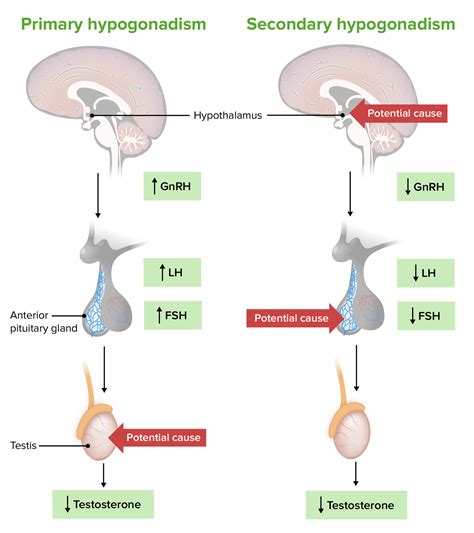
Hypogonadism is a clinical syndrome that occurs when the gonads— testes and ovaries —produce low levels of sex hormones due to a disruption of the hypothalamic - pituitary -gonadal (HPG) axis. The release of sex hormones is under the control of the hypothalamus and the pituitary gland.
What are the symptoms of hypogonadism?
Hypogonadism refers to a clinical syndrome that results in low levels of sex hormones. There are two types of hypogonadism: primary and secondary. Signs and symptoms of hypogonadism depend on the time of onset, and can include delayed puberty, primary amenorrhea, changes in mood and energy, infertility, decreased libido, and erectile dysfunction.
Hypogonadism References
If you want to know more about Hypogonadism, consider exploring links below:
What Is Hypogonadism
- https://www.mayoclinic.org/diseases-conditions/male-hypogonadism/symptoms-causes/syc-20354881
- https://www.healthline.com/health/hypogonadism
- https://en.wikipedia.org/wiki/Hypogonadism
- https://www.medicalnewstoday.com/articles/307634
- https://www.osmosis.org/answers/hypogonadism
- https://my.clevelandclinic.org/health/diseases/15603-low-testosterone-male-hypogonadism
- https://bestpractice.bmj.com/crawler/topics/en-gb/1093
- https://www.verywellhealth.com/hypogonadism-signs-symptoms-and-complications-5191935
- https://www.merckmanuals.com/professional/genitourinary-disorders/male-reproductive-endocrinology-and-related-disorders/male-hypogonadism
Hypogonadism Information
Explore Related Topics
Testosterone Replacement Therapy as an Adjunct Treatment for Depression: Worth Considering?
Explore the possibility of using testosterone replacement therapy as an adjunct treatment for depression in addition to standard interventions.
Testosterone Replacement Therapy and its potential influence on mental well-being beyond libido enhancement
Explore the wider impact of testosterone replacement therapy on mental well-being beyond just improving libido.
What should men consider before starting Testosterone Replacement Therapy?
Join us to discuss the important factors and considerations that men should keep in mind before embarking on Testosterone Replacement Therapy, including potential risks, lifestyle adjustments, and monitoring requirements.
The Long-Term Effects of Testosterone Replacement Therapy on Muscle Mass and Strength
This thread offers an opportunity to discuss the potential long-term consequences, positive or negative, of testosterone replacement therapy on muscle mass and strength.
Which Testosterone Replacement Method Offers Quick Results?
Discuss the different testosterone replacement methods and determine which one provides quicker results for managing low testosterone.
Is Testosterone Replacement Therapy a Viable Option for Prostate Health Management?
Evaluating the suitability of TRT as a management option for prostate health
Does Age Play a Significant Role in the Effectiveness of Testosterone Replacement Therapy for Mood Disorders?
Analyze the influence of age on the efficacy and outcomes of testosterone replacement therapy for managing mood disorders.
Testosterone Replacement Therapy for Bone Health: What Do the Experts Say?
Delve into the opinions and insights of medical experts regarding the use of testosterone replacement therapy for enhancing bone health in men.
Testosterone Replacement Therapy vs. other treatments: Which one is more effective for low libido?
Engage in a discussion comparing the effectiveness of testosterone replacement therapy against other treatments for low libido in men.
Testosterone Replacement Therapy and Muscle Mass: What Do the Experts Say?
Seek clarity by exploring the opinions and insights of medical professionals specialized in men's health.
Testosterone Replacement Therapy: Breaking Free from Fatigue's Grip
Join the conversation to discuss the potential of testosterone replacement therapy in breaking free from the grip of fatigue and improving overall well-being.
Testosterone Replacement Therapy and Prostate Health: Exploring the Grey Areas
Delving into the nuanced aspects of TRT's effects on prostate health
Testosterone Replacement Therapy: What men need to know before considering treatment for low libido
Delve into the critical aspects men should be aware of before considering testosterone replacement therapy for low libido.
The Role of Testosterone Replacement Therapy in Weight Management
Investigate the relationship between testosterone replacement therapy and weight management in men.
Testosterone Replacement Therapy: Balancing Benefits and Risks for Prostate Health
Balancing the potential benefits of TRT with its associated risks for prostate health
Hormonal Therapy and Male Reproductive Disorders: What's the Connection?
Connect the dots between hormonal therapy and male reproductive disorders, and engage in a conversation on the interplay between the two.
Testosterone Replacement Therapy and Fertility: What Men Need to Know
Explore the impact of testosterone replacement therapy on male fertility and reproductive health.
Testosterone Replacement Therapy and Fertility: Friend or Foe?
Engage in a lively debate about the impact of testosterone replacement therapy on fertility and reproductive health. Discuss the risks and potential effects on your ability to conceive.
Understanding Testosterone Blood Tests: What Do the Results Mean?
Break down the significance and interpretation of testosterone blood test results in the context of testosterone replacement therapy.
Testosterone Replacement Therapy: A game-changer for men battling low libido due to aging?
Discuss the role of testosterone replacement therapy in combating low libido associated with aging in men.
Testosterone Replacement Therapy's Influence on Prostate Health: What You Need to Know
Informing users about the key considerations when it comes to TRT and prostate health
Can Testosterone Replacement Therapy improve mood and cognitive function?
Engage in the discussion about the potential effects of Testosterone Replacement Therapy on mood, cognitive function, and overall mental well-being in men.
Overcoming Fatigue: Can Testosterone Replacement Therapy Make a Difference?
Be a part of the conversation on the potential role of testosterone replacement therapy in overcoming fatigue and boosting energy levels in men.
How Long Does It Take to Notice the Effects of Testosterone Replacement Therapy on Mood?
Engage in a conversation about the expected timeframe for experiencing mood-related improvements after starting testosterone replacement therapy.
Optimizing Muscle Growth with Testosterone Replacement Therapy
Dive into the relationship between testosterone replacement therapy and muscle growth, strength, and physical performance.
The Role of Testosterone Replacement Therapy in Recovering from Muscle Wasting Conditions
Delve into the potential benefits of testosterone replacement therapy in recovering from muscle wasting conditions such as injury, illness, or prolonged bed rest.
Oral Testosterone: A Convenient Option or Too Good to Be True?
Engage in a discussion about the convenience and effectiveness of oral testosterone as a testosterone replacement therapy option.
Testosterone Replacement Therapy: An Effective Treatment for Male Depression?
Dive into the effectiveness of testosterone replacement therapy as a treatment option specifically for male depression.
Testosterone Replacement Therapy and the psychological benefits for men with low libido
Discover the potential psychological benefits of testosterone replacement therapy for men struggling with low libido.
Testosterone Replacement Therapy: Is it the Magic Pill for Achieving Your Dream Physique?
Explore the idea of whether testosterone replacement therapy alone can pave the way to your ideal physique or if other factors should be considered.
Can Testosterone Replacement Therapy Boost Energy and Alleviate Fatigue?
Participate in this discussion to explore whether testosterone replacement therapy can provide an energy boost and alleviate fatigue in men.
Is Testosterone Replacement Therapy Linked to Cardiovascular Risks?
Delve into the potential connection between testosterone replacement therapy and cardiovascular risks. Join the conversation to discuss the impact of TRT on heart health.
Testosterone Replacement Therapy vs. Natural Remedies for low libido: Which one is better?
Engage in a lively debate regarding the effectiveness of testosterone replacement therapy versus natural remedies for low libido.
How long does it take to see results from Testosterone Replacement Therapy?
Engage in the discussion to find out when men can expect to see results from Testosterone Replacement Therapy and what factors may influence the timeframe.
Why is Testosterone Replacement Therapy Important for Maintaining Bone Health as Men Age?
Uncover the importance of testosterone replacement therapy in preserving bone health in aging men.
What are the Potential Side Effects of Testosterone Replacement Therapy for Depression?
Discuss the possible risks and side effects associated with testosterone replacement therapy for depression.
Is Testosterone Replacement Therapy a Viable Solution for Low Energy Levels?
Engage in this conversation to discuss whether testosterone replacement therapy could potentially address low energy levels in men.
The Science Behind Testosterone Replacement Therapy and improved libido
Delve into the scientific research behind testosterone replacement therapy and its impact on libido, as we explore the potential mechanisms at play.
Can Testosterone Replacement Therapy Trigger Prostate Issues?
Explore the potential links between TRT and prostate complications
Testosterone Replacement Therapy: Is it an Effective Treatment for Osteoporosis in Men?
Dive into the role of testosterone replacement therapy as a potential treatment option for osteoporosis in men.
Is Testosterone Replacement Therapy an Effective Treatment for Men with Mood Disorders?
Delve into the role of testosterone replacement therapy in managing mood disorders among men.
Testosterone Replacement Therapy: Is it the ultimate solution for low libido?
Explore the benefits and drawbacks of testosterone replacement therapy as a potential solution for low libido in men.
Can Testosterone Replacement Therapy Really Improve Depression?
Explore the potential benefits of testosterone replacement therapy for treating depression and enhancing mood.
Can Testosterone Replacement Therapy Really Boost Muscle Mass and Strength?
Join the discussion on whether testosterone replacement therapy is truly effective for enhancing muscle mass and strength in men.